
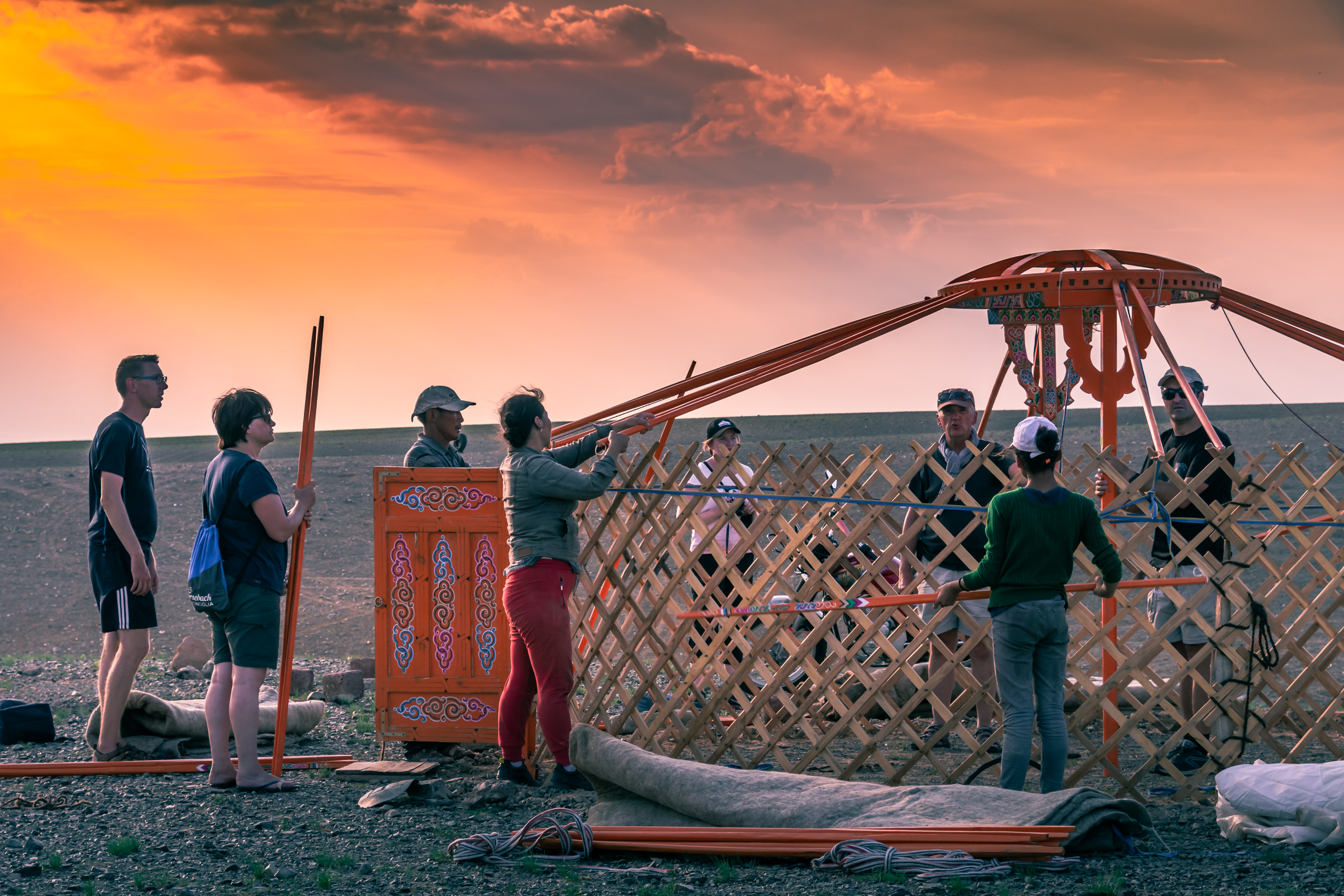

It is important to know a few basic rules of Mongolian cultural etiquette:
Things Not to Do
In a Mongolian ger (yurt), daily life is guided by tradition, and many rules and taboos govern domestic behavior. The most common taboos include:
Leaning on or passing between the ger’s central posts: This custom likely had practical origins but also symbolizes the posts as a source of strength in the home.
Stepping on the threshold: It is considered bad luck to step or stumble on the threshold of a ger when entering. Historical travelers in Mongolia reported that anyone who stepped on the threshold of the Khan’s palace could be punished severely.
Spreading arms to touch both sides of the door frame: The cross above the doorway traditionally symbolizes that a death has occurred and that visitors should keep their distance. Touching both sides of the frame with outstretched arms is therefore considered a bad omen.
Throwing waste into the fire: Fire is regarded as the purest element, so no trash should be thrown into it.
Mixing clean and dirty items: Mongols place great importance on cleanliness and believe that allowing dirty objects to touch clean ones will contaminate them. For example, it is unacceptable to put dirty clothes in the family chest.
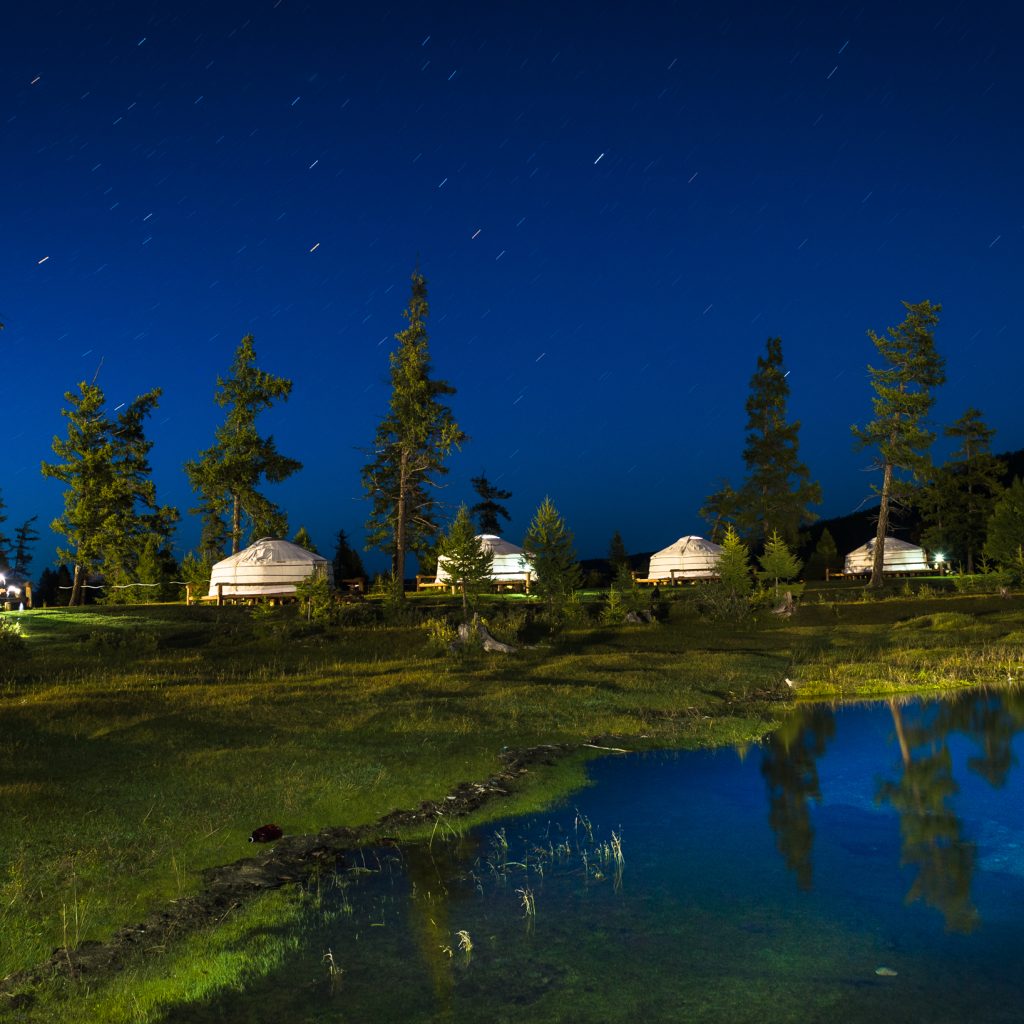
Rules Governing Life Inside the Ger (Yurt)
Walking or sitting to the north of someone older than you: Although Mongols adhere less strictly to Confucian values than some other Asian cultures, elders are traditionally shown considerable respect. The oldest and most respected visitors sit at the back of the ger, with others seated beside them in decreasing order of age.
Passing between the fire and the back of the ger: The fire and the rear of the ger are the two most sacred areas. Nomads believe an energy line runs between these points, which should not be broken. All visitors must therefore enter and exit from the same side.
Walking counterclockwise: The “nar zuv,” literally “the direction of the sun’s rotation,” refers to clockwise movement in Mongolia. Mongols believe everything in the universe belongs to cycles of time and motion, and it is important to move in harmony with these cycles. For example, when closing the roof of the ger, one must walk inside the ger clockwise.
Bringing weapons into the home: Before entering, visitors must remove knives from their belts and hang them in plain view to indicate friendly intentions.
Other customs govern the way guests are received. Mongols generally show great respect to visitors and will welcome anyone into their home without a prior appointment. When a visitor arrives, they should call “nokhoi khor!”, which means “Hold your dog,” whether or not there is a dog present. A family member will then come out of the ger and invite the visitor inside.
The three main types of reception are tsailaga, budaalaga, and dailaga, literally meaning offering tea, offering rice, and offering dinner. Tsailaga is the most common, used when someone respectfully offers tea to a visitor, relative, or friend; when a nomadic family has just settled and wants to meet neighbors; or during any holiday. Budaalaga and dailaga are similar but indicate a higher level of respect for the guest.
Cuisine in Mongolia
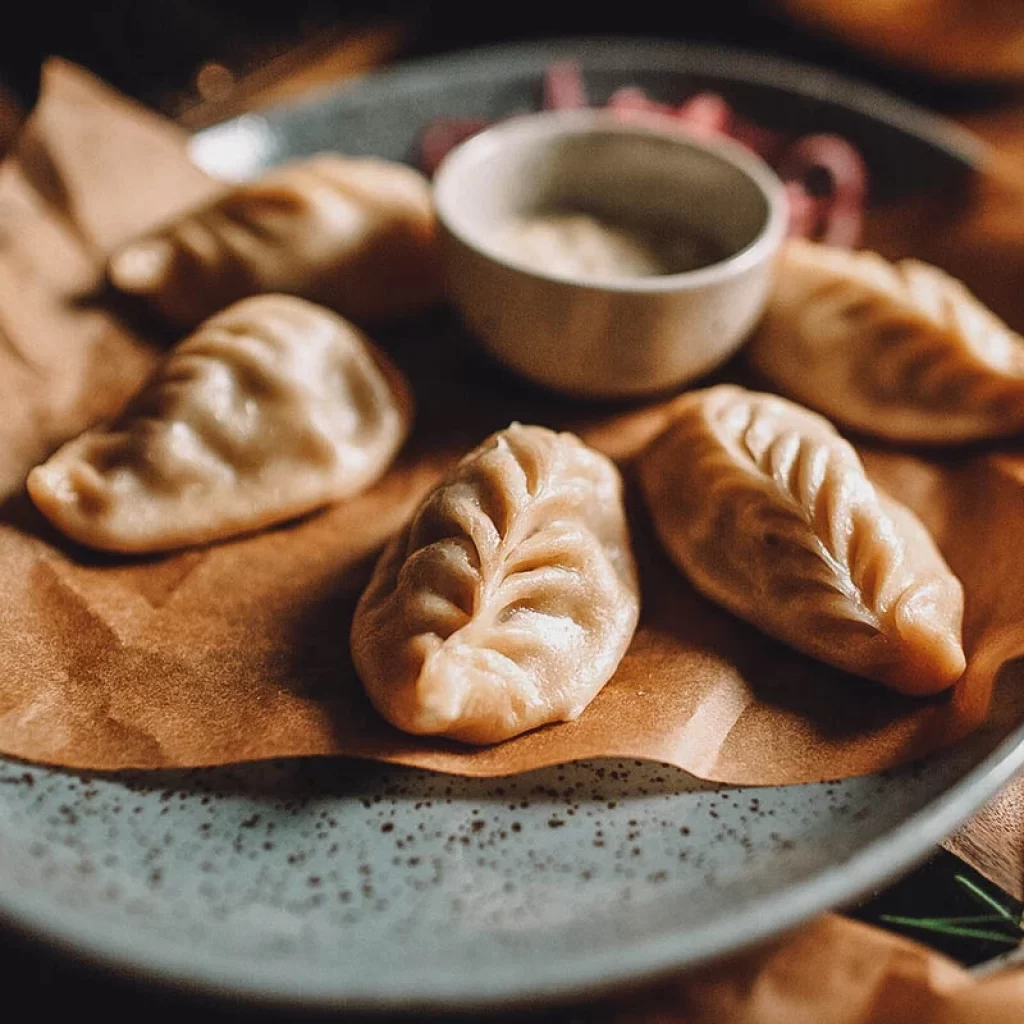
Mongolian cuisine is primarily based on two types of food: dairy products (called “white foods,” mostly consumed in summer) and meat (called “red food,” mostly consumed in winter, usually boiled), which may sometimes seem austere to travelers. While you can eat a wide variety of foods in Ulaanbaatar, outside the capital, sheep and goat meat (and milk) are staple foods.
After the “white season” in summer, consisting mainly of dairy products, Mongols satisfy their “meat hunger” with mutton cooked, fried, or prepared in dumplings called buuz or pastries called khuushuur. Milk is heated to make a coagulated cream called orom. Thick and yellow, this cream is spread on slices of Russian bread and transformed into curds called aaruul.
Meals are special moments in Mongolian culture, and tea is essential. Note that salt and milk take a more prominent role than the tea leaves themselves, and it is common to melt cheese or reheat the previous day’s dinner in the tea.
Milk, which is never consumed raw, is used to prepare over 300 different recipes as well as two traditional alcoholic beverages: airag, made by fermentation, and koumis, made by distillation.
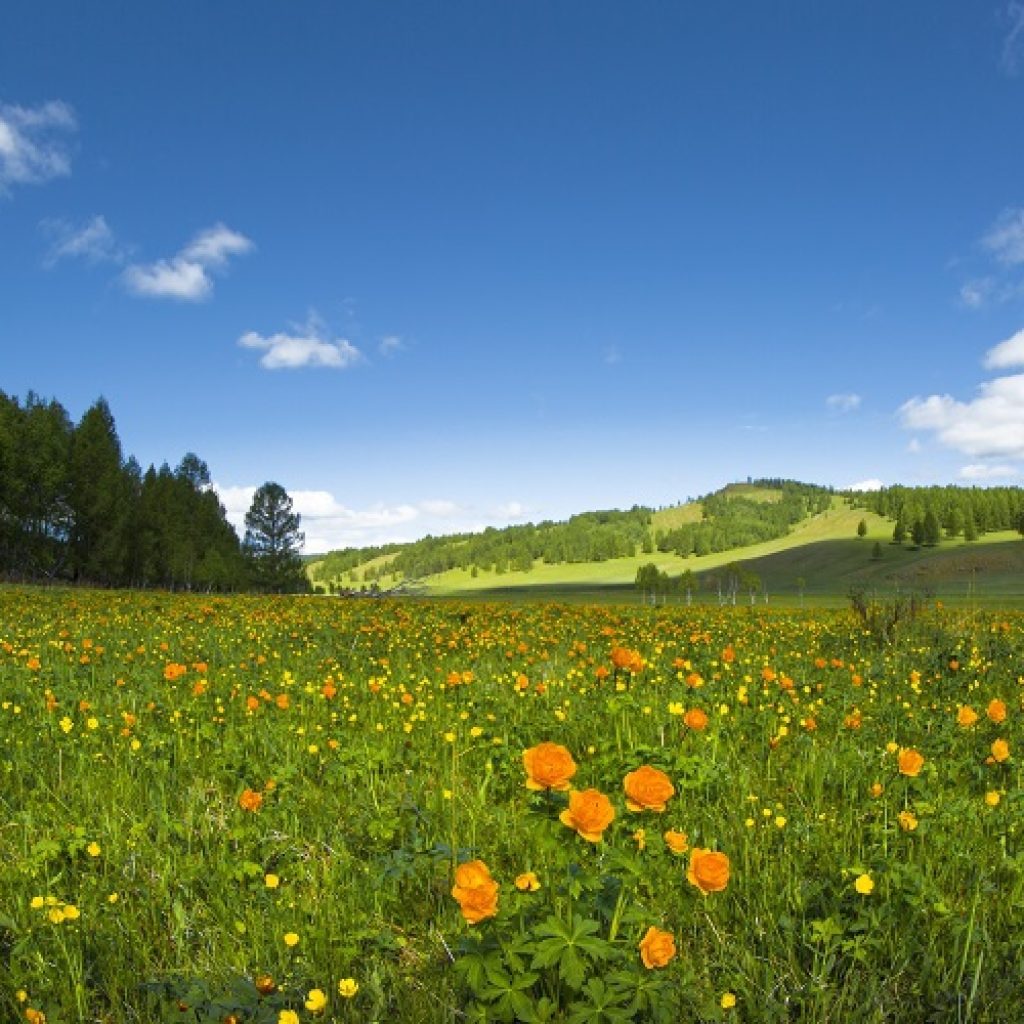
When to Visit Mongolia
Far from the seas and surrounded by high mountains (up to 4,300 meters) that block humid winds, Mongolia has a continental, very dry climate, with large temperature variations depending on altitude and season. Although Mongolia enjoys 280 days of sunshine per year under a deep blue sky, the weather can be unstable, with sudden and violent but brief storms (temperature swings from 30–35°C down to 10–15°C during a short storm!).
The best time to visit is from May to October, with average daytime temperatures between 15°C and 25°C and average nighttime temperatures between 5°C and 15°C. It is also possible to experience temperatures below 0°C at night.

Packing Tips
Luggage: On international flights (economy class), generally one checked bag of 20–23 kg per person is allowed. Soft luggage (duffel bags or soft-sided suitcases) is strongly recommended as it fits better in 4×4 vehicles. On domestic flights, total luggage weight—including carry-on—is often limited to 15 kg, so check at booking.
Clothing: A soft bag is preferable to a hard suitcase (easier to carry and to store in vehicles). Bring sweaters, a fleece vest or jacket, a windbreaker, or a Gore-Tex jacket to cope with rapid temperature changes, sun during the day, and cold after sunset. Sunglasses and sunscreen are essential. Bring a rain jacket as a precaution.
Footwear: Comfortable walking or hiking shoes are recommended.
Other gear: A headlamp is very useful, and small gifts or offerings can be appreciated when visiting villages.
Electricity in Mongolia
Voltage: 220 volts, 50 Hz, with outlets similar to those in France.
While traveling in the steppe, electricity will be rare. However, you can charge your electronic devices at equipped ger (yurt) camps where you stay.
It is also possible to charge batteries from a car’s cigarette lighter—bring an appropriate adapter.
For autonomous trekking, a solar charger or spare batteries is recommended.
Roads in Mongolia: Conditions and Travel Advice
Types of roads you’ll encounter:
Dirt/gravel roads: Most tourist destinations, national parks, and rural areas are accessed via unpaved roads. These can be bumpy, dusty, and affected by weather. After rain, some roads may become muddy or temporarily impassable.
Paved roads (asphalt): Mainly between Ulaanbaatar and major towns or border crossings. Generally smooth but can have potholes.


Comment (0)