

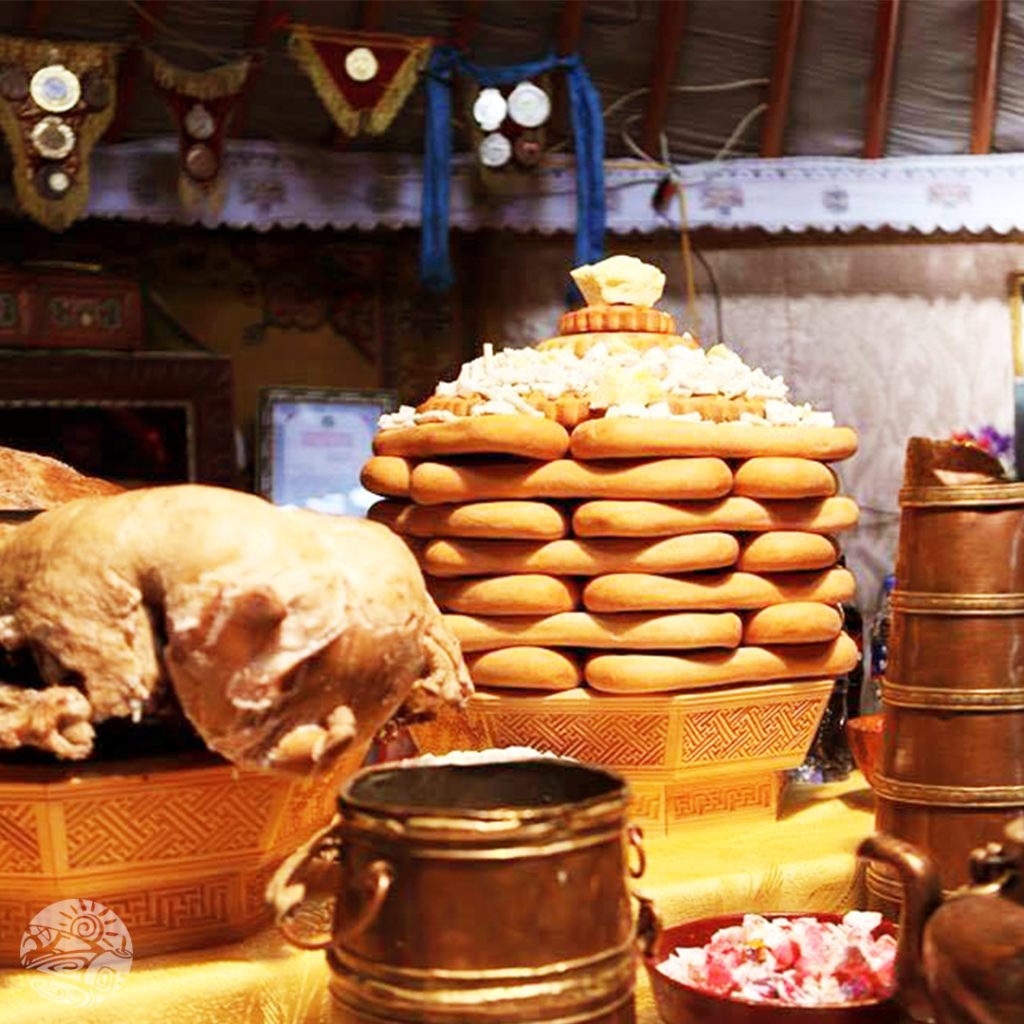
Tsagaan Sar, which literally means “White Moon,” gets its name because the color white symbolizes purity and happiness. It usually lasts three days between January and February or March, with the exact dates determined in advance by a Buddhist leader.
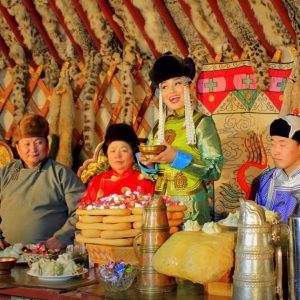
In some regions of Mongolia, families light candles on the altar on this day. Mongols also visit other families to exchange gifts and perform the traditional greeting called zolgokh, where people hold each other by the elbows. It is common to see people wearing traditional Mongolian costumes and holding a khadag—a blue silk scarf symbolizing respect. After a lavish dinner including buuz (steamed dumplings), lamb tails, and mutton, people socialize and drink airag, an alcoholic beverage made from fermented mare’s milk.
The Significance of Tsagaan Sar
Tsagaan Sar, or the Mongolian Lunar New Year, is a very important festival in Mongolia. It is the most anticipated holiday among Mongols and has deep roots in nomadic tradition. Originally, the New Year was celebrated in autumn before herds were sheltered for the winter. Later, it took on a religious aspect within Buddhist tradition when Emperor Khubilai decided to align it with the first moon of spring in February.
How is New Year Celebrated in Mongolia?
Preparations for the New Year begin a month in advance. Residents clean and organize their gers (yurts). They prepare traditional foods such as airag (fermented mare’s milk) and other “white foods,” ceremonial cakes like Ul Boov, and mutton called uuts for the festive meals.
On New Year’s Eve, called Bituun, the ger is thoroughly cleaned. Families share a festive meal and participate in traditional games such as knucklebone tossing, dominoes, and card games until dawn.
Celebrating Tsagaan Sar
The best way to celebrate Tsagaan Sar in Mongolia is undoubtedly within a rural family. Celebration tours usually start and end in the capital, Ulaanbaatar.


Comment (0)