
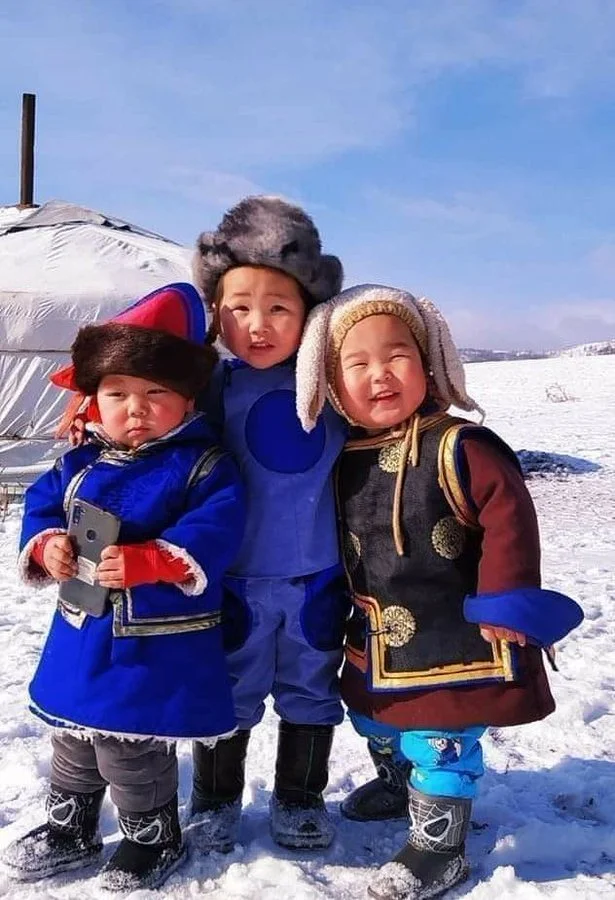
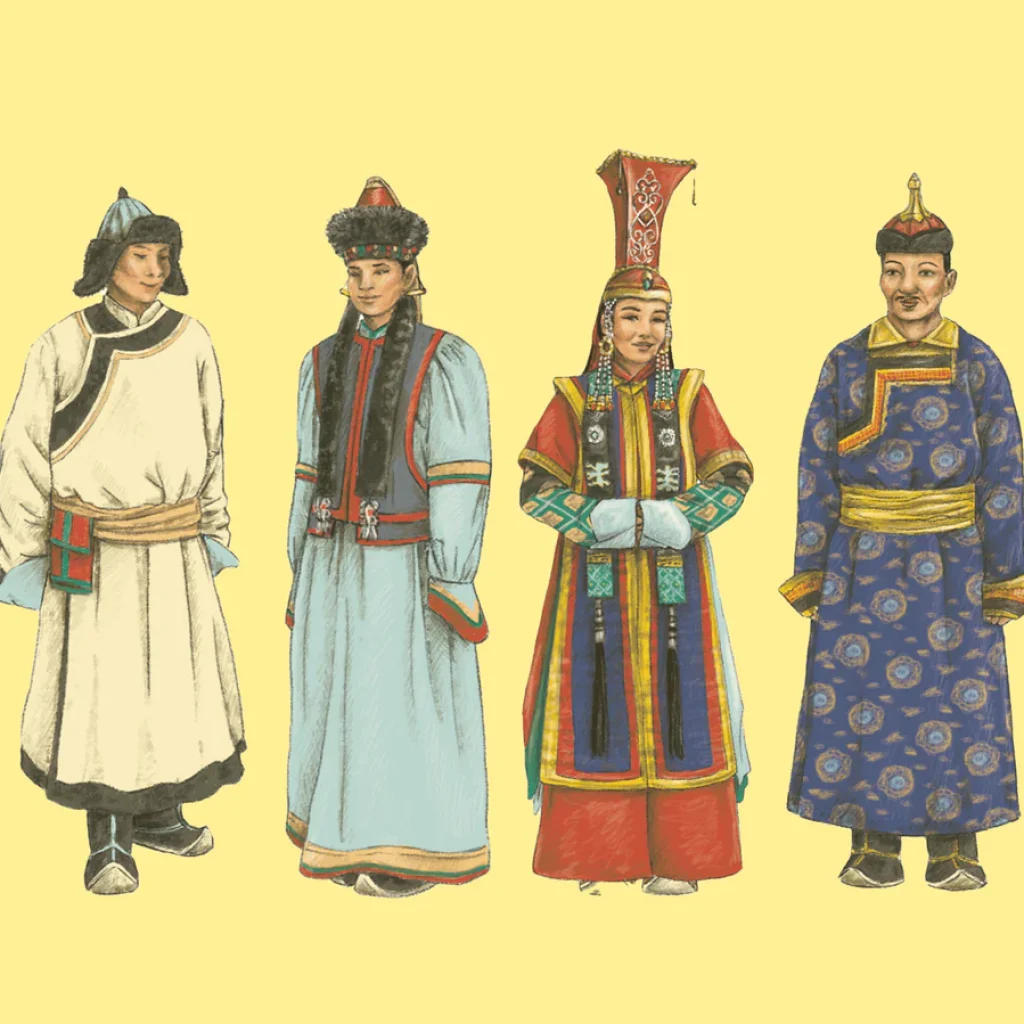
Traditional Mongolian clothing is a unique cultural heritage that has developed over centuries in close connection with the nomadic lifestyle, harsh climate, and livestock-based economy. It is not only everyday wear but also an important expression of culture, social identity, traditions, and aesthetics.

The most common traditional garment is the deel, worn by men, women, and children alike. The deel is a long, loose robe with wide sleeves and a wrap-front design secured with buttons or ties. It varies in thickness depending on the season, with heavier versions made of wool or padded materials used during winter for warmth and protection against cold weather.
Traditional Mongolian attire also includes essential accessories such as hats, belts, and boots. The belt plays both a decorative and practical role, helping to secure the deel, support the body during physical work, and carry small items. Mongolian boots are specially designed for riding horses and enduring cold, dry climates.
Women’s traditional clothing is often more decorative, featuring embroidery, intricate patterns, and silver ornaments. It can also vary based on age, region, and social status. Traditional clothing is commonly worn during national holidays, festivals, weddings, and other important ceremonies.
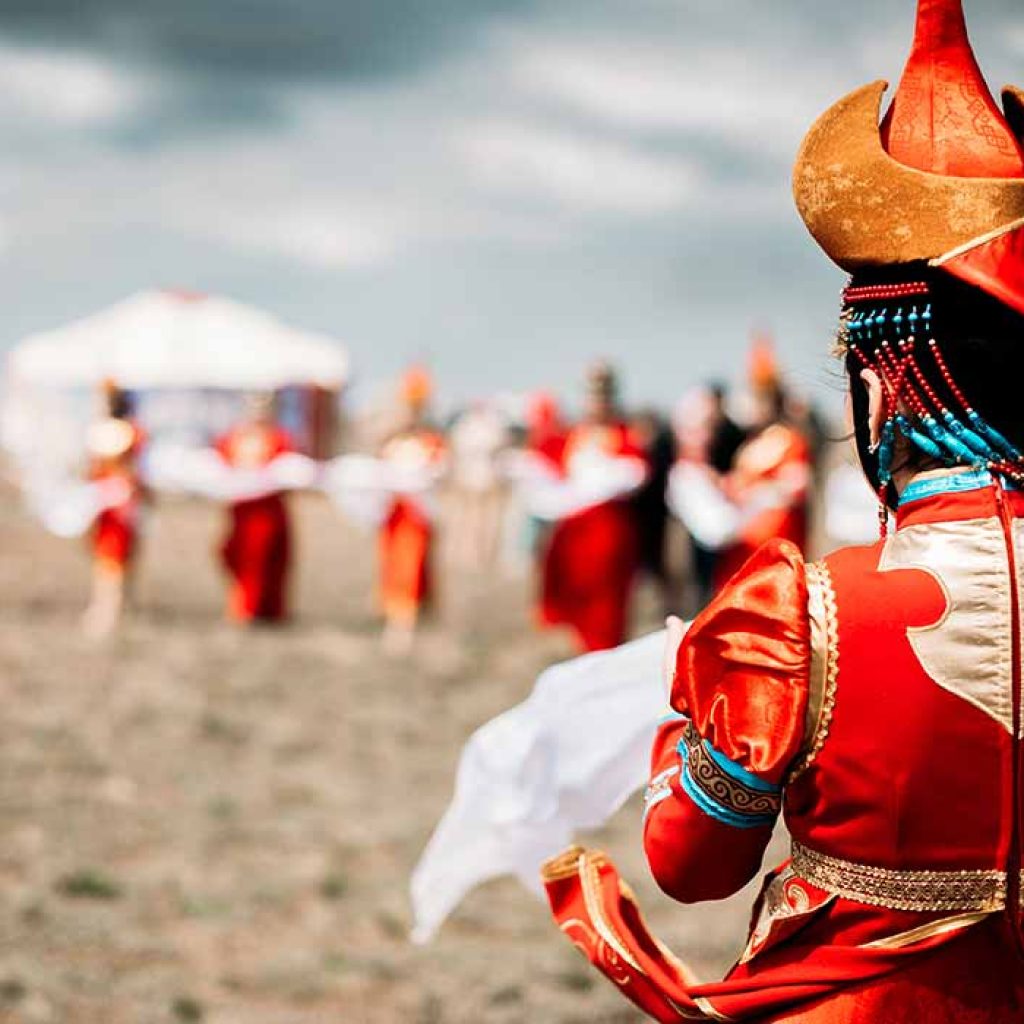
Mongolian national clothing and accessories represent more than just fashion. They reflect the history of the nomadic people, their close relationship with nature, and their practical yet aesthetic approach to life. Today, these traditions continue to be preserved while also inspiring modern fashion designs.


Comment (0)